
What is wet mix macadam? Wet mix macadam (WMM), called plentmiks temel (PMT) in Turkey and also known as plant-mixed granular base, is a granular road base material produced by proportioning crushed aggregates of different sizes to a specified gradation and mixing them with a controlled amount of water in a plant. In the pavement structure it lies between the subbase and the asphalt surfacing and spreads traffic loads evenly to the layers below.
In this article we explain, step by step, how this base material is produced, which equipment a PMT plant consists of and what to look for when choosing a plant.
PMT at a glance:
- Name: Plentmiks Temel (Turkish for plant-mixed base), usually called wet mix macadam in English
- Material: Crushed aggregate + water at optimum moisture content
- Production: Cold mix; no drying, no heating and no bitumen
- Where it is used: The base course between the subbase and the asphalt surfacing
What Is Wet Mix Macadam?
The word “plentmiks” means that the material is mixed in a plant, stationary or mobile, instead of being blended on site with a grader. The aggregates are drawn from the bins in the proportions set by the mix design, water is added and the mixer turns everything into a homogeneous material. As a result, every truck is loaded with material of the same gradation and the same moisture content.
With the road-mix (mix-in-place) method it is difficult to keep the gradation and the water content constant. Plant-mixed base, by contrast, gives a layer that meets the specification, is easy to compact and has a high bearing capacity, thanks to controlled production. That is why it is widely preferred on highway, motorway and airport projects.
Where WMM Sits in the Pavement Structure
From bottom to top, a flexible pavement usually consists of the following layers:
- Subgrade: Compacted natural ground or fill.
- Subbase: A granular layer with a wider gradation.
- Base course (PMT / WMM): The plant-produced granular layer that distributes the load.
- Binder course: The bituminous layer produced in an asphalt plant.
- Wearing course: The asphalt surface in direct contact with traffic.
The thickness of the PMT layer is determined by the traffic load, the bearing capacity of the subgrade and the project design. The binder and wearing courses laid on top of it are produced in an asphalt plant.
How Is Wet Mix Macadam Produced?
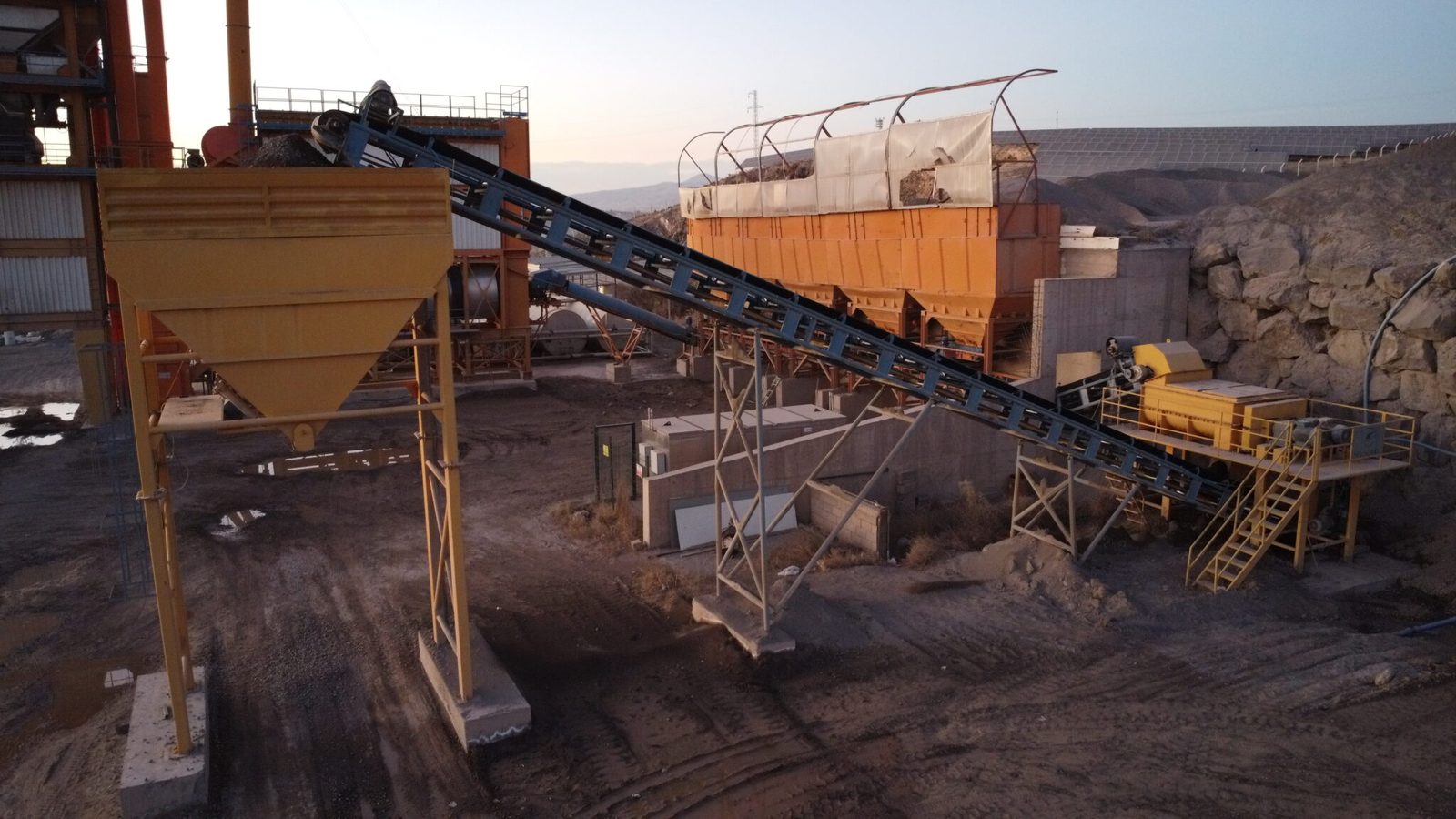
WMM production is a cold process: the aggregate is neither dried nor heated. In a typical wet mix macadam plant, production follows these steps:
- Stockpiling and loading: Aggregates of different sizes (e.g. 0–5, 5–12, 12–25 and 25–38 mm) are kept in separate stockpiles and loaded into the bins with a wheel loader.
- Proportioning: The feeder belt under each bin delivers material in the mix-design ratio by adjusting its speed.
- Collecting and conveying: The proportioned aggregates join on the collecting belt and are carried to the mixer by an inclined conveyor.
- Adding water: A water pump and flow meter add just enough water to reach the optimum moisture content (OMC).
- Mixing: A twin-shaft continuous mixer (pugmill) blends the aggregate and water into a homogeneous mix without interruption.
- Loading: The mix is discharged from the surge hopper into trucks and hauled to site.
- Laying and compaction: On site the PMT is spread and compacted with rollers to the design density.

What Equipment Does a PMT Plant Consist Of?
A PMT plant can be configured in different ways depending on capacity and site conditions, but the core equipment is similar in every plant.
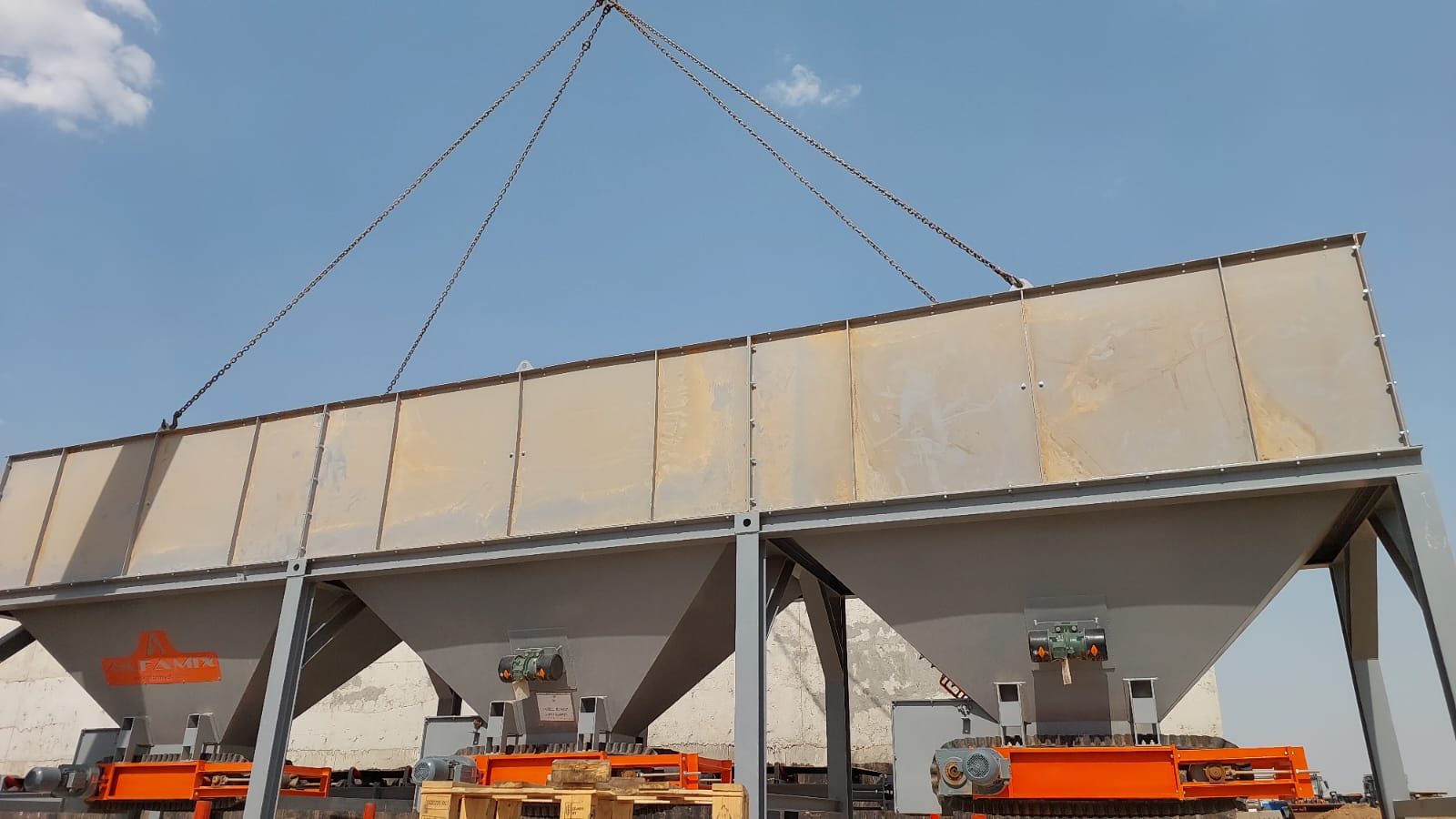
Aggregate Bins and Feeder Belts
The heart of the plant is the proportioning system. Each aggregate fraction is held in a separate bin compartment, and the feeder belt beneath it, driven by a geared motor, delivers material at an adjustable speed. The number of compartments is chosen according to how many aggregate fractions the mix design uses. For bin design and feeder details, see our cold feed bin unit for asphalt plants; the same bin design is used in PMT plants.

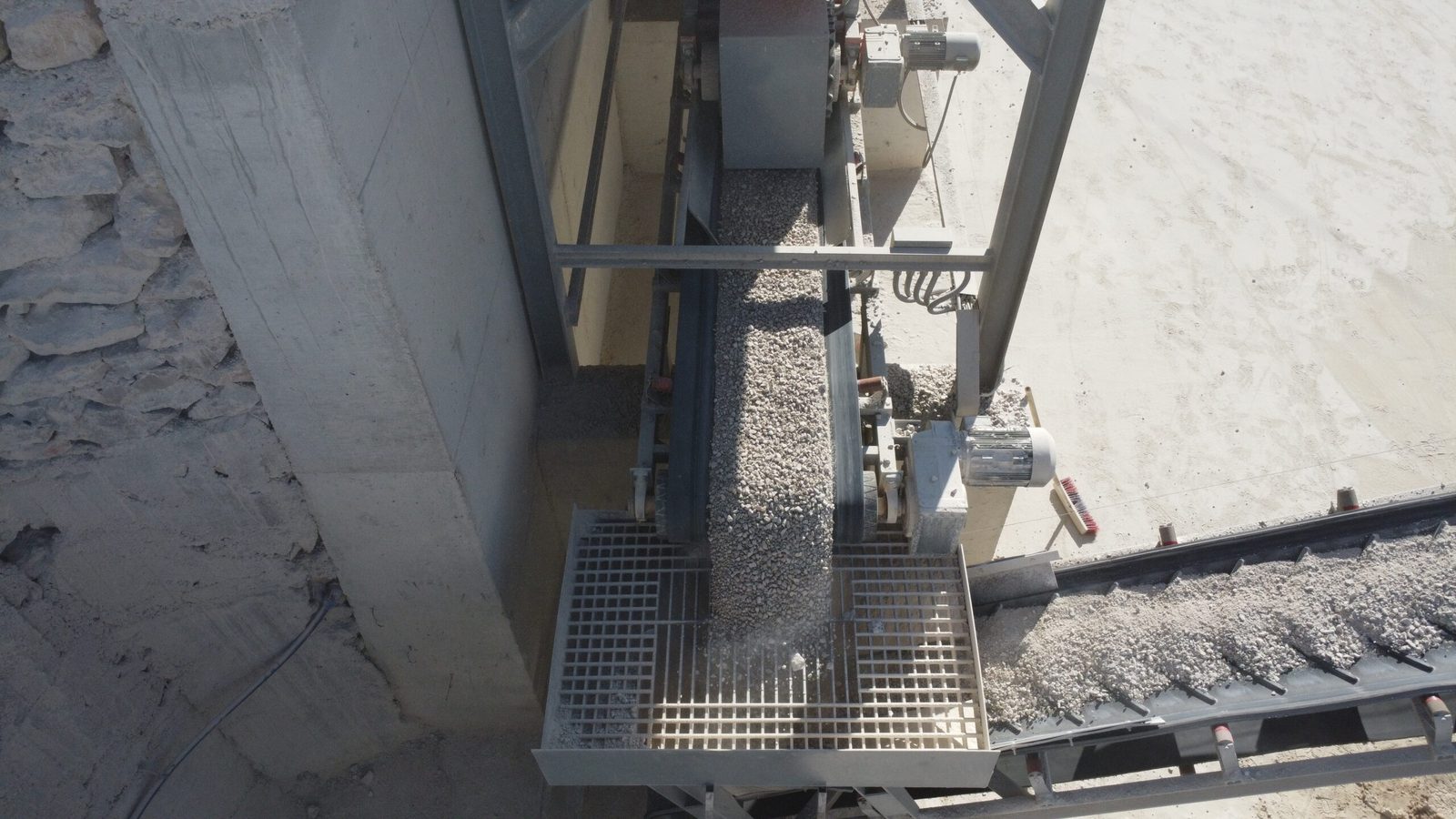
Collecting and Transfer Conveyors
The collecting belt running under the bins transfers the proportioned material to the inclined conveyor. The width and speed of the conveyor are sized to the hourly capacity of the plant.
Water Dosing System
It consists of a water tank, pump, flow meter and spray bars. For the base to compact properly, the amount of water is set according to the optimum moisture content determined in the laboratory; too much or too little water directly reduces compaction quality.
Mixer (Pugmill)
PMT plants usually use a twin-shaft mixer that works continuously. The paddles and liner plates should be made of wear-resistant material and be easy to replace. The asphalt plant mixer unit that produces hot mix asphalt, on the other hand, works on the batch principle: the two mixers do a similar job but operate differently.
Surge Hopper
The material leaving the mixer is collected in a loading hopper with a discharge gate. Production does not stop while trucks change, and because the material does not free-fall from a height, segregation is reduced.
Control and Automation
Belt speeds, water flow and production quantity are managed from the control panel. An automation system that stores recipes, monitors production in real time and produces reports enables the plant to deliver repeatable, specification-compliant output. For details, see our asphalt plant automation systems page.
Optional: Cement Silo and Screw Conveyor
If stabilised mixes such as cement-treated granular base are to be produced, a cement silo, screw conveyor and dosing unit can be added to the plant.
WMM Plant vs. Asphalt Plant: Key Differences
Many road contractors run both a PMT plant and an asphalt plant at the same quarry. Although the two plants share equipment such as aggregate bins and conveyors, the production process is different:
| Feature | PMT (WMM) Plant | Asphalt Plant |
|---|---|---|
| Product | Granular base material | Hot mix asphalt |
| Binder | Water (cement if required) | Bitumen (stored in bitumen tanks) |
| Drying and heating | None | Dryer drum and burner |
| Screening and weighing | Volumetric / speed-controlled proportioning on belts | Screen unit and weighing system |
| Dust control | Wet production, low dust | Filter system required |
| Mixing | Continuous (pugmill) | Batch or continuous |
For the details of the asphalt production process, read our article How Does an Asphalt Plant Work?
How to Choose a PMT Plant
- Capacity: Determine the capacity in t/h by looking at the daily paving target, working hours and number of trucks together.
- Number and volume of bin compartments: These should match the number of aggregate fractions in the mix design and the loader cycle.
- Proportioning accuracy: Frequency-controlled belt motors and an accurate water flow meter reduce deviations in gradation and moisture.
- Wear parts: Mixer paddles, liners and belt pulleys should be easy to source and quick to replace. Spare parts support is decisive here.
- Stationary or portable design: If the project is short and the site changes often, choose a modular structure that is easy to dismantle and relocate.
- Installation and service: Getting the foundation design, assembly, commissioning and technical service from a single supplier shortens the time to start-up.
Factors Affecting the Quality of Wet Mix Macadam
- Gradation: Aggregate proportions must stay within the grading limits of the specification, and the particle size distribution in the stockpiles should be checked regularly.
- Moisture content: The mix should be produced close to the optimum moisture content determined in the laboratory. In hot, windy weather, evaporation during haulage must be taken into account.
- Segregation: Reduce the drop height and load the material straight from the surge hopper into trucks rather than from conical stockpiles.
- Compaction: The layer should be spread at a suitable thickness and rolled until it reaches the design density.
For site planning, our asphalt plant installation and plant assembly and disassembly pages will also give you useful ideas.
Frequently Asked Questions
What does PMT stand for in road construction?+
PMT stands for Plentmiks Temel, Turkish for “plant-mixed base”. It refers to road base material produced by mixing aggregate and water under control in a plant rather than on site, which in English is usually called wet mix macadam.
What is the difference between base course and subbase?+
The subbase is the layer with a wider gradation laid directly on the subgrade. The plant-mixed base is laid on top of the subbase; it is produced in a plant to tighter grading limits and is the main load-distributing layer beneath the asphalt surfacing.
What is the thickness of a WMM layer?+
The thickness of a PMT layer depends on the traffic load, the bearing capacity of the subgrade and the pavement design. Thick layers are usually laid in more than one lift so that they can be compacted well. Always follow the technical specification of your project for the exact value.
Is bitumen used in wet mix macadam?+
No. WMM is a granular material produced cold, and the only binder is water, with cement added if required. Bitumen is used in the asphalt plant to produce the asphalt for the upper layers.
How much does a WMM plant cost?+
The price mainly depends on hourly capacity, number of bin compartments, mixer type, level of automation, options such as cement dosing, stationary or portable design and the scope of installation. For a price tailored to your project, fill in our quotation form.
Wet Mix Macadam Plants by Alfamix Asfalt
Alfamix Asfalt designs, manufactures and installs on site all the equipment of a PMT plant (mechanical stabilization plant) in-house, from the aggregate bins and conveyors to the water dosing system, the mixer and the automation. The 50 years of industry experience of our founders enables us to design a plant that suits your capacity and site conditions.
For a PMT plant suited to your project, get a quote now or give us a call. You can watch our plants at work on the Alfamix Asfalt YouTube channel.
Other Blog Posts
25 October 2026
How to Choose a Bitumen Tank: Capacity, Heating and Price Guide
Choosing the right bitumen tank has a direct impact on uninterrupted plant operation, fuel consumption and asphalt quality. The short answer to how to choose a bitumen…
Read More →
3 September 2026
Polymer Modified Bitumen Production Plant
Polymer Modified Bitumen Plant Alfamix Asfalt manufactures high-performance Polymer Modified Bitumen Plant solutions designed for road construction, transportation…
Read More →