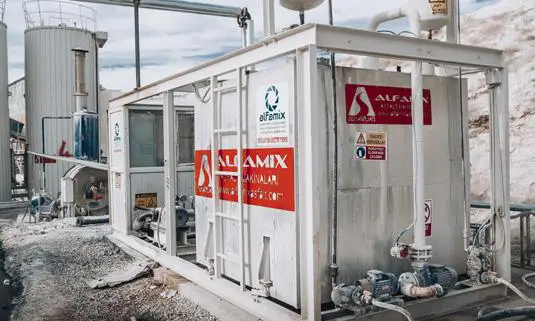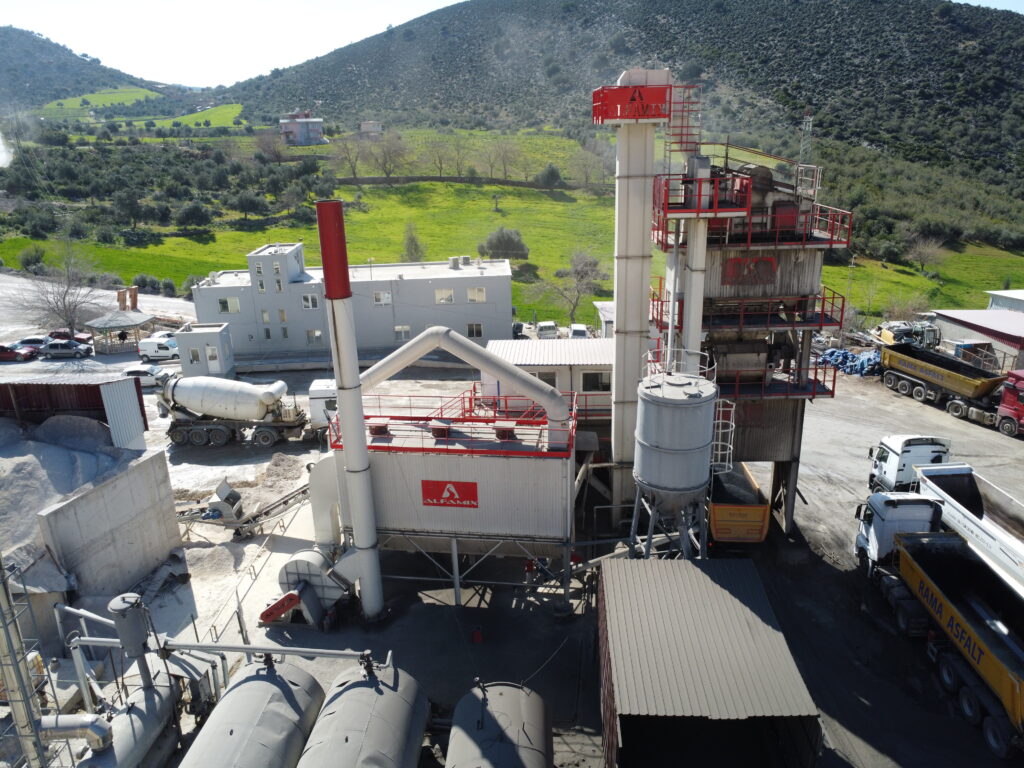
Bitumen Emulsion Plant
In today’s road construction and road maintenance projects, Bitumen Emulsion Plant stands out with its cold application technologies. Offering the advantages of lower energy consumption, low-temperature applicability, and flexible use compared to hot asphalt plants, these plants play a critical role in base coatings, surface coatings, repairs, and special low-temperature applications. In this article, we will focus on the keyword “Bitumen Emulsion Plant,” explaining what this plant is, its advantages, components, and the importance of proper planning.
What is a Bitumen Emulsion Plant?
Bitumen emulsion is a solution product containing fine-grained bitumen particles dispersed in water and stabilized with an emulsifier. Bitumen Emulsion Plants are specialized facilities designed to produce this type of emulsion bitumen at the highest quality. Emulsion-type bitumen can be used in hot asphalt mixes, but it is also preferred for asphaltic surface treatments, surface coating, and maintenance applications. Emulsion production involves precise dosing, colloid milling, accurate recipe management, and homogeneous mixing. Companies producing this product in Turkey and Europe offer services with mobile or stationary bitumen emulsion plants.
Basic Components and Operation of a Bitumen Emulsion Plant
A bitumen emulsion plant generally consists of the following main components, which work together to produce high-quality emulsion:
Colloid Mill: It forms an emulsion by mixing bitumen particles with a water-acid-emulsifier mixture at high speed. For example, manufacturers state that using a 30 kW colloid mill achieves particle sizes of <2-6 µm.
SAE Preparation Tank (Water-Acid-Emulsifier): The tank system that prepares the water-acid-emulsifier mixture required for the emulsion. The tank contains equipment such as a load cell weighing system and heating coils.
Weighing and Measuring Systems: Precise weighing of emulsifier, acid, water, and bitumen ratios, and recipe control are performed with flowmeter systems.
Storage and Transfer Tanks: Stainless steel tanks and heating systems for storing, heating, and preparing the produced bitumen emulsion for shipment. systems.
Control Panel and Automation System: Recipe management, automatic dosing, production monitoring, and quality control with PLC or computerized control systems.
Advantages of Using Bitumen Emulsion Plants
There are many advantages to using bitumen emulsion plants. These are:
Low-temperature production and application – Bitumen emulsions can be produced and applied at much lower temperatures than hot asphalt, providing energy savings and environmental benefits.
Suitable for cold and damp surfaces – Where hot mix production is not possible, emulsion applications offer long-lasting solutions.
Economical production and maintenance costs – Cost-effective solutions emerge thanks to lower energy consumption, easy transportation, and portable configurations.
Various application areas – Can be used in many areas such as primer coating, surface coating, repair, minor roads, rural roads.
High quality and stabilized structures